It’s nearly the end of August right now, and I’ve been away a bit, but I’ll be upfront about this. I’m not the best at holidays. This no doubt makes me sound a bit nuts – I know my partner thinks so – but so be it. Let me at least explain.
I’ve never been comfortable with the whole idea of relaxation, usually because it suggests the absence of strain, or effort of any kind. This is a bit of an alien concept to me, since while some of us might like a break from our jobs, we don’t always crave the absence of work. That’s why the ideal holiday, since I’m obliged to go on them, isn’t the absence of challenging activities. It’s the presence of different activities from those I normally do.
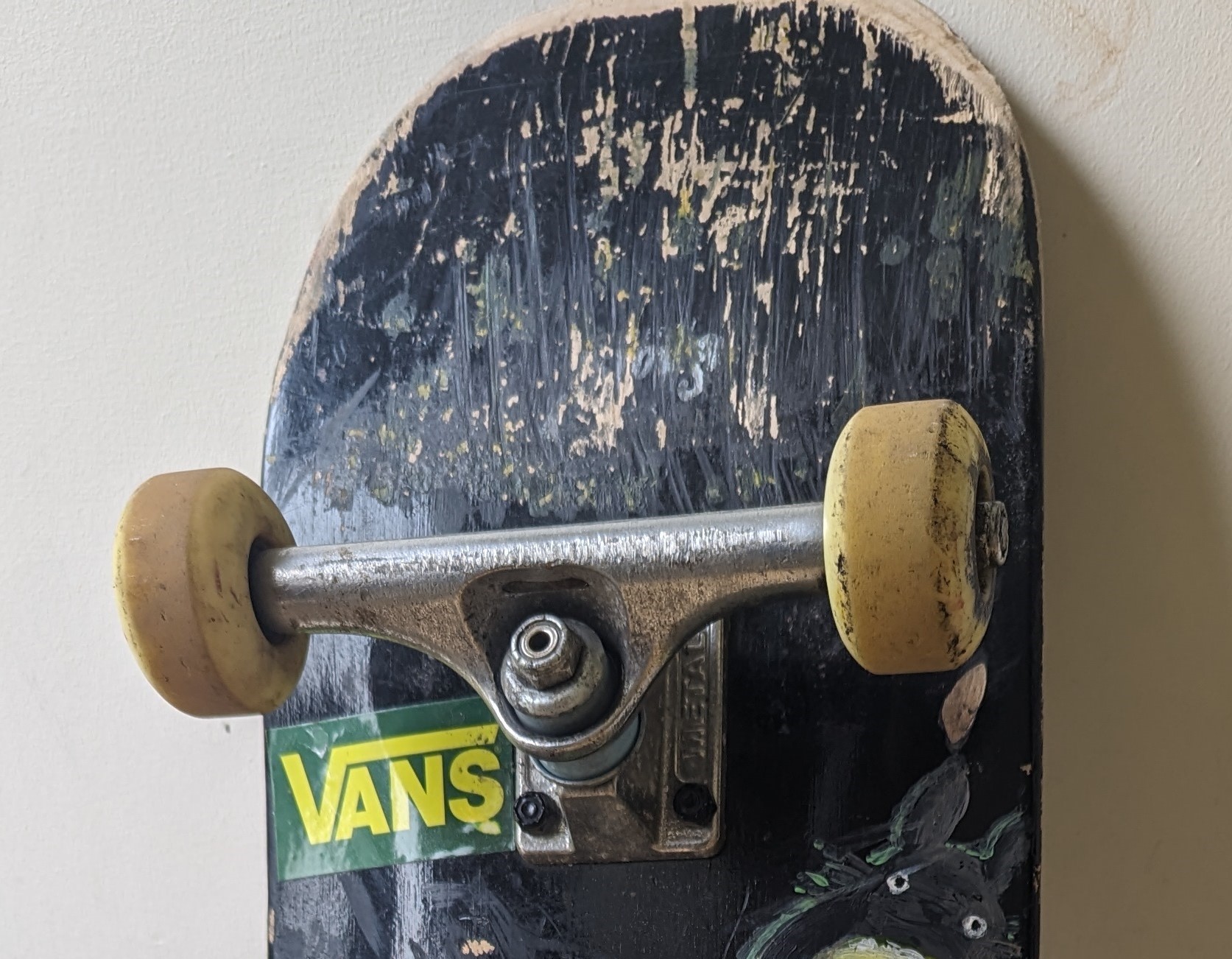
In truth, since it’s not my day job, this includes for me every hour spent on a skateboard. I’ve already established in earlier posts that blissful experiences can be (and very often are) the ones that require intense application and concentration, and therefore absorption (the concept of ‘flow’), which hardly represents the absence of ‘work’. Skating, for me, is the achievement of flow, but so is writing, which (like skating) I mostly do voluntarily: almost entirely, like this same blog you’re reading now, for my own amusement.
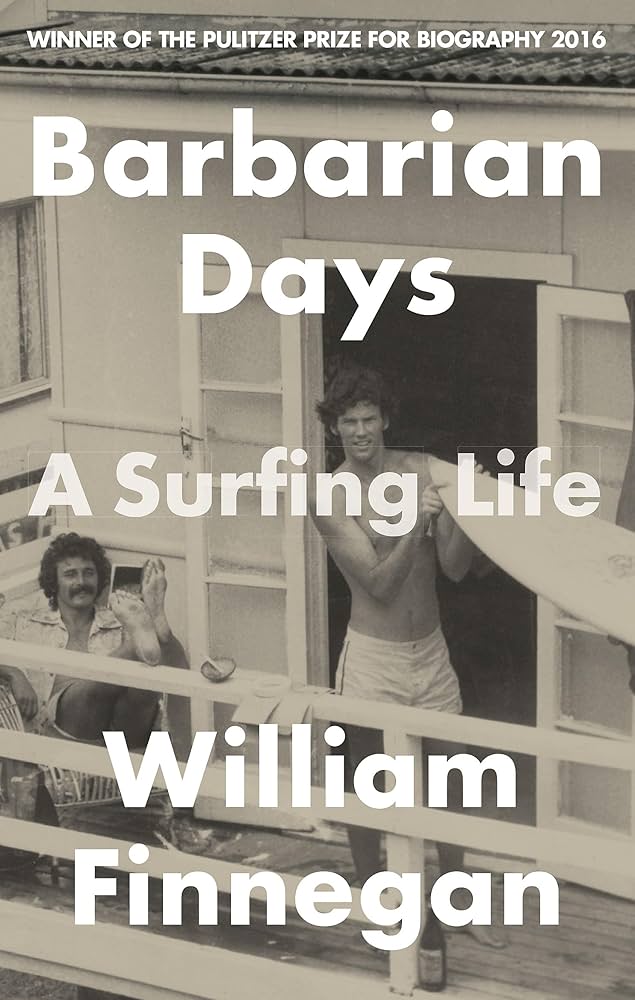
As it happens, my holiday reading this year has been William Finnegan’s beautiful and appropriately immersive memoir about surfing, Barbarian Days. Halfway through, you might be forgiven for thinking Finnegan has done nothing else with his time, besides writing this pretty hefty book, but cruise and drop in on the world’s best waves. In actual fact, he’s the seventy-odd year-old author of several books on international politics and conflicts. Published when he was in his sixties, Barbarian Days is Finnegan outing himself to the wider reading world as a surfer; but it’s also his attempt, as he puts it, to work out the significance of such a seemingly ‘meaningless’ pursuit as surfing, and the near-permanent vacation his surfing days once seemed to represent. An attempt, in other words, to explain the vital importance to this writer’s life of something which, in its seeming pointlessness, is the very opposite of his life’s ‘work’.
As I want to explore now, and in my following post, as much as they provide similar outcomes at some level, it’s clear that skating and writing – like surfing and political journalism – seem to represent two very different kinds of activities. The question is: at what point does one stop, and the other take over? And more to the point: why does it have to?
Since writing is something you do sitting down, and is by nature reflective, it might seem an obvious point to make that writing follows experience. Or that a life spent in action should logically, like any memoir (the key is in the name), be written about only as remembrance, after the event.
Sometimes, though, it works the other way around.
Arthur Rimbaud – the very same Arthur Rimbaud, you might recall from an earlier post, who urged his readers to be ‘absolutely modern’ – spent several furious years rethinking French poetry in the 1870s. His travels across Europe and its filthy, fabulous cities inspired probably his most famous work, the Illuminations, a collection of delirious prose poems. He then wrote what turned out to be his final long poem: the equally feverish, semi-autobiographical A Season in Hell.
A work he finished when he was eighteen.
This wasn’t, though, a story of creative energy cut short. Had he died as a teenager of some suitably poetic disease, or simply blown out his brains, Rimbaud may well have joined that long list of the prematurely departed; those beautiful-but-damned artists who (we like to imagine) left the world with so much great future work unmade. But Rimbaud, in fact, would live for another twenty years before succumbing to bone cancer. He stopped writing at eighteen because he didn’t want to write anymore, choosing instead to pursue money over literary fame, devoting his life to – amongst other things – running guns in Africa.
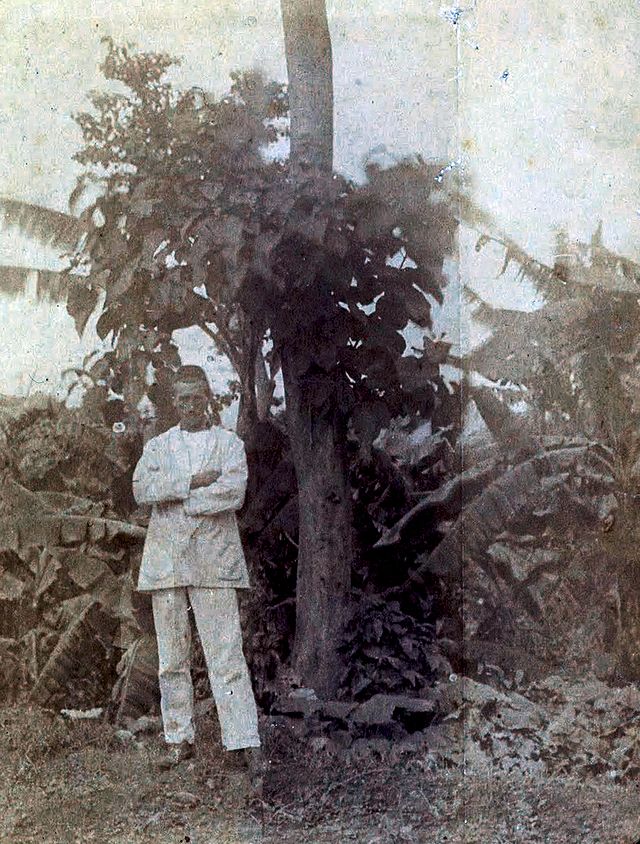
(Arthur Rimbaud, in later life. Not writing much at all.)
What a waste of talent. But really? I find Rimbaud an intriguing and heroic figure, but just as much for his early retirement as for the often incomprehensible verses that made him famous. In today’s celebrity culture, after all, quitting when you’re young and on top is perhaps the only remaining act of true rebellion. More to the point, though: Rimbaud’s active decision to quit also raises the question of what writing is actually for. His decision might have been down to exhaustion, or perhaps just apathy, but the teenage poet was also self-aware enough to know that the world would keep turning without any more of his deranged poems.
Or maybe anyone’s poems, for that matter. ‘Do I know nature yet?’ he writes in his final work. ‘Do I know myself? No more words.’ Rimbaud’s short but brilliant career burns out in the discovery that, in the quest for pure experience and true knowledge, at some point, you have to put down the pen.
Ironically (if inevitably) it’s often writers themselves who make this the tortured subject of their own work. Toward the end of his recent book The Real Work, after chapters on the sedate charms of life-drawing, baking and close-hand magic, and the slightly less sedate experience of learning to drive in New York, Adam Gopnik reveals how, in later life, he discovered in himself ‘a deep affection for the art of fist-fighting’. Not actual fist-fighting, I might add – Gopnik, in his mid-sixties, claims to never have thrown a punch in earnest – but nevertheless actual physical pain and practice; the shadow-boxing and bag-pummelling, the dodging and dancing and jabbing, all in preparation for facing and fighting ‘the imaginary opponent who would never arrive’.
If the real fight remains largely in his head, Gopnik’s point is that even the motions of learning to box take him – like Finnegan, his colleague at the New Yorker, a long-time professional writer – out of the realm of ‘literature’ and into the domain of ‘that one thing writers never have, and that is decisive experience’. For the writer, ‘everything passes through language’, including the most intense and visceral of human action. Until he put on the gloves himself, Gopnik’s experience of boxing was only channelled through print, through fights recalled and represented, culminating in a moment of great self-deception: the moment when the writer or reader deludes themselves into thinking that the experience they have immersed themselves in, through words, is one they have actually lived.
It’s easy to see Gopnik’s take-up of boxing in his sixties, like the fifty year-old Tom Vanderbilt’s conversion to surfing in Beginners, as further instances of mid- and later-life ‘crisis’. Too easy, in fact – but all too wrong. Gopnik states more directly what Vanderbilt perhaps only hints, but the motivations for both men are much the same. Experience, for much of the time, is lived remotely, through fictional or real-life figures, on the page or via the screen. Even if it is only to scratch the surface of possibilities, the desire to feel for yourself a bit of what it is like to fight in the ring, to ride a wave, or (in my case) to skate a ramp, is to bypass the mediated experience that constitutes much of our horizon and to live immediately – literally, ‘with nothing in between’.
This desire, since it’s one that seem to afflict the middle-aged, might suggest we see it as a timely recognition that one no longer looks young. In truth, it’s a slightly different, less image-conscious recognition at work: the realisation that one no longer experiences the world as a young person. It’s as a child, after all, that we experience everything in its fullness, without questioning or selection, and before teenage– and adulthood intervenes and closes off so many avenues. The very fact that we might somehow seek to recapture it is a sign that, at some point, it was lost to us.
It’s profoundly wrong, too, to think that the same middle-aged skater (or surfer, or boxer) is attempting to relive their youth (especially if, as in all the cases above – mine included – this wasn’t a youth they even had). It’s like what I discussed before about ‘late style’: you can never be that young person again, even if you wanted to, and this recognition informs the things you do and how you do them in new and different ways. Nor, indeed, would I want to be that young person again, if only because that endlessly experimental teenage person did not know why they did the things they did.
In middle-age, by contrast, the pursuit of that decisive experience isn’t just one of the many accidents that goes with teenage territory. It’s now a conscious choice, one lived with the benefit of experience and understanding. Now, when I get on a board, I know for sure why I’m doing what I’m doing: like living a part of my life again, only with the added benefit of hindsight. Sometimes – a lot of the time, even – getting older has its advantages.
 More Than Coping
Leave a comment