‘In the west there was a massive stand of cumulus cloud, so like a city seen from a distance – from the bow of an approaching ship – that it might have had a name… The day was beautiful, and it seemed to him that a long swim might enlarge and celebrate its beauty.’
I’ve had these words knocking about my head for a few months now, ever since I finally took the time to read the short story they come from: ‘The Swimmer’, originally published in the New Yorker in 1964. Never mind that, in the story, the guy thinking these thoughts turns out to be delusional. The thought in itself, and that last sentence that expresses it, remain unimpeachable.
In John Cheever’s story, Ned Merrill transforms the eight miles separating him from his family home into a ‘quasi-subterranean stream’ of backyard swimming pools, a man-made river of ‘light-green water’. The notion is quixotic; but like most quixotic things, also sublime. In a way I’ve expressed earlier in this same blog, Merrill’s long swim is magnificent: a way of amplifying everyday time and space; an adventure that is at once of the body, but also of the imagination.
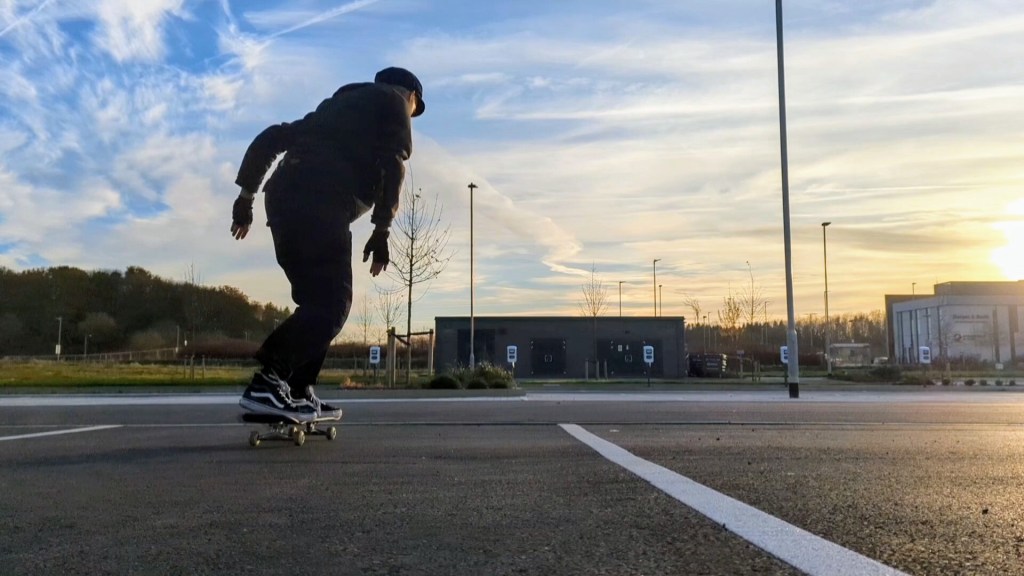
Different country, similar example. Earlier this year, I was skating with my daughter around the campus where we live. It was one of those fine spring days when the weather is noticeably milder, when there’s some undefinable but recognisable smell in the air that hints at the coming of summer. Maybe it was the warmth; maybe it was the spare, unexpectedly gorgeous landscape of occasional green trees against a blue sky; but whatever it was, a phrase popped into my head that captured my thoughts and feelings of that moment: a California of the mind.
At the time, while I thought about using it in this blog, I stored the phrase away. It was cheesy, somehow: it sounded, for one thing, like a James Taylor song, which can rarely be a good thing. And I’d never even been to California!
Still, it stuck in my mind; waiting, in fact, to be dredged up again by Cheever’s limpid story – at which point the phrase made total sense. Because by definition, it wasn’t an actual California at all, not even an actual place; but rather a landscape, like Merrill’s river, formed through the interaction of the activity and the environment. We were – as I now come to understand it – enlarging and celebrating the day’s beauty.
And of course, we were also skateboarding. Funnily enough, it’s only as I started writing this post that I made the connection between Ned Merrill’s stream of New York swimming pools and that parallel stream on the West Coast: those emptied-out, deserted backyard pools that, a decade or so after Merrill’s swim, would be ridden by surfers-turned-skaters, in effect ushering in the mysterious arts of skateboarding – not to mention the design of skateparks – as we now know them.
Writing about this same period in his book The Impossible, Cole Louison describes the ‘prohibited air’ evoked, most famously, by the young Glen Friedman’s images of this 1970s scene. But the illicit charm of this early pool-riding wasn’t because it involved breaking and entering, since that in itself hardly required or implied having a skateboard. Nor, I suggest, and as Louison puts it, was it entirely down to its sense of ‘territorial discovery’. Just as intoxicating is its impression of pure, summery expenditure: the image of ‘yellow haired’ teens, ‘brownly naked but for iridescently faded jeans, moving… in new fluid postures’; or, more simply put, of ‘beautiful kids doing entirely new things in an alien landscape’.
Some might (and plenty would) think of those same beautiful kids as delinquents. Not so much, again, because they’re committing crimes, but because they are seen to be doing something perhaps even worse: devoting their time to leisure. They exist in pure, unproductive abstraction, carving circles and other shapes around concrete bowls. Like the abandoned pools themselves, they are derelict.
But this is, of course, skateboarding’s attraction. On a similar note, in his memoir Barbarian Days, William Finnegan describes what he calls ‘the disabling enchantment’ of surfing, and how, as a working adult, it became an enchantment with which he was ‘trying to live’. Yet the lure of this immersive activity, one he knows to be both purely aesthetic and solipsistic, still pulled him away from his desk and other tasks, back into the waves: surfing, as he writes, as ‘some battered remnant of childhood that kept drifting… into the foreground of my days.’
To try to find the point in skateboarding, like surfing, is to miss the point. At its simplest, it exists as an oasis within the settings and schedules of normal life – which is to say, it reminds us what we cherish in life in the first place: those moments of absorption and abandonment where the demands often put upon us lose their weight. Delinquency; dereliction: both words have, deep in their etymology, the same sense: to have left; to be absent. To not be doing one’s duty. What better means, then, of enlarging and celebrating the beauty of the day?
Only right now, and at least for the time being, this isn’t possible.
If you’ve read my previous post, you’ll know that, earlier this autumn, I badly broke my ankle doing this same delinquent activity. At the end of that same post, I found myself asking what it is I might do now, not just in the foreseeable absence of skating, but of pretty much any other thing that perennially gets me out of the house. What, in short, is a skater without their board?
Clichés in this instance are freely available. Stir crazy. Chomping at the bit. Itching to go. None of which, as it turns out, are to the point at all. And though I do find myself sometimes gazing at my (currently) useless board, personifying it with melancholy, the surprising conclusion I’ve come to is this: it’s not so bad.
In that last post, I described the feeling that, both before and on the very day of my accident, I was starting to skate more out of a sense of obligation than choice (Finnegan, in the same vein, writes about the ‘grim compunction’ he experienced as a thirty-something surfer: the frequency with which, after many hours spent contemplating waves from the beach, he would find himself ‘saying things like, “Let’s get it over with.”’). This, in hindsight, felt for me like an ominous sign. When skating starts to feel like duty, you’re no longer being delinquent – which means, in turn, you’re not really skating at all.
As someone constantly beset by the thought that I need to getting on with work, that I must be more productive, the one lesson skateboarding has taught me is this: that there is always something more valuable than the thing you think is important. The paradox is that, sometimes, the thing you think is important might just be skateboarding. But the other lesson is that skateboarding, since it’s as much a way of thinking as an actual practice, also shows us the way out of this fix.
Ever since I’ve been cooped up, then – at a time that is also an especially busy period at work – I’ve actually found myself drifting away from these responsibilities more than I normally would have done before. Discovering, or rediscovering, things I don’t have to do: books I’ve been planning to read; movies I really ought to have seen; old videogames I’ve always said I’m too busy to play (Tony Hawk’s Proving Ground, anyone?), played on an old console (a PS2!) previously gathering dust. Not to mention writing this very blog, which, of course, no one makes me write (and which, more than anything else, is the reason I write it).
For now, though, at least for the moment – and before it starts to feel like a whole other duty in itself – I’m going to be signing off. I’ll return if and when (hopefully when) I get back on the board. To quote an actual song by actual, though famously non-surfing, Californians: I’m waiting for the day.
Only right now, I’m neither hurrying things, nor wishing that time away. And I’ll keep looking for other ways to enlarge and celebrate this day, right here, wherever I might find them.
 More Than Coping
Leave a comment