As one might expect, a lot of tears get shed in Federer: Twelve Final Days, the just-released documentary about Roger Federer’s final match and retirement. The film is most affecting, though, in its more quiet moments of revelation: Rafa Nadal, confessing that he broke down at the thought of never getting to play his great rival again; Federer’s wife, Mirka, saying that what saddens her most is no longer being able to watch him play. Or the great man himself, his svelte, James Bond-esque veneer cracking when, to camera, he finds himself asking: What comes next?
What might come next is something Asif Kapadia and Joe Sabia’s film doesn’t really answer, probably for fear of spoiling its air of solemn but affectionate farewell. Yet the question lingers ominously over the whole enterprise, haunting the ageing, grizzled and increasingly balding figure of Nadal, and also of Andy Murray, both of whom are now rapidly approaching the same career end-point. And no more so than when, almost in passing, one of Federer’s entourage reminds us bluntly that ‘all sportsmen die twice’.
For some, this first ‘death’ comes early. Excluding a brief and ill-fated return to the tennis tour, Björn Borg retired when he was still just twenty-six, shattered (if we believe this persistent myth) by his defeats to John McEnroe at Wimbledon and the US Open. Borg is there in Federer, nominally ‘captaining’ the European team in the Laver Cup: a mostly symbolic role in what is, in truth, an exhibition event. What the ever-inscrutable Swede really thinks of it all is hard to say, though I can’t help feeling that Borg’s now eternal role is to remind everyone of something that happened almost fifty years ago, when he was not the person he is now. No one wants to know what has happened in the interim. Though the genuinely shattering reality – at least, possibly, for the man himself – is that the period between Borg’s retirement and the present day represents more than eighty per cent of his adult life.
Unsurprisingly, since it’s all that now remains of Federer’s competitive career, Twelve Final Days is steeped in memories of it, conveyed via beautiful, fleeting match-cuts, intersecting old video with the new (co-director Kapadia, as shown in his earlier films Senna [2010] and Diego Maradona [2019], is a brilliant editor of footage). One sequence shows the Swiss player preparing to play his last match, tying on his trademark headband; cut then to Federer, twenty years earlier, doing the exact same gesture – the sense that this is something he has done literally a thousand and more times given poignancy by the understanding he will never do it again. Every mundane gesture here – the laying out of towels, the tying of shoes, the application of grip tape – is loaded with this sense of finality. It is, in some very real sense, the portrait of a man about to walk out to face his possible death.
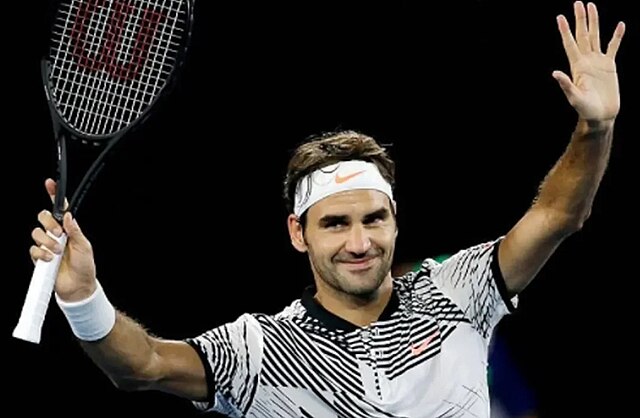
In truth, elite athletes don’t exactly die twice. It’s more accurate to say that they live a whole life, which then ends, only much too early in the broader span of a human lifetime. Federer encapsulates the fate of most athletes to live their lives in reverse, Benjamin Button-like, experiencing a sort of career maturity at an incredibly early age (like Borg, Federer was a five-time Wimbledon champion by his mid-twenties), before shrinking gradually toward competitive irrelevance, reliant on the generosity of a public thanking them just for showing up. It’s perhaps no shock that some athletes, to my eyes at least, look much older than they really should (Nadal, in particular) since they lead such intensely compacted lives; enough, in reality, for more than one person, and all in the space of – if they’re really lucky – two decades or so at most.
It’s ridiculous under those circumstances to measure one’s own life and achievements against those of sporting superstars, though one might still play that particular game. In my case, while my own twenties weren’t exactly without their professional peaks, it wasn’t until the end of my thirties (when my daughter was born, not coincidentally) that things started to fall into place. As it happens, it was at the exact same age Federer was when he retired – forty-one – that I got my first permanent teaching job (the one I’m still in now) but also published my first book (an event, if I want to indulge in the thought, comparable to a first tournament win). Granted, someone else could have done any of these things at a much earlier age, but it took me all those years to work out what I was going to really do with my life – at the same point at which stars like Federer are coming to the ‘end’ of theirs.
It would be equally ridiculous of me to think that my own examples of mid-life exploration and reinvention – the very things I’ve been charting throughout this blog so far – had any bearing on the discussion of Roger Federer’s next steps (the reality that Federer and I ‘move among different circles’ is, if anything, a vast understatement). But still: a lesson one might take from all this is that retirement from professional sport is merely that: the end of a particular phase in life, but not the end of life itself. The match is done, but to quote one other ex-tennis player (Boris Becker, I believe) after a difficult defeat: ‘no one actually died out there.’
Federer probably seems older than he is because for so many of us, he’s been part of our lives for so long. But the guy is still just 42. Murray and Nadal aren’t yet out of their thirties. The notion that athletes die twice might have some truth to it, but the fact that they ‘die’ so young is as much silver lining as cloud, since they are then given a whole other life – and a whole second half of life, more broadly – to live it.
To go back to Federer, then, that question of What comes next? might be the toughest thing an elite athlete has to face. But it needn’t be a source of despair. The answer, in truth, might be What is it that you want to do? Even if you’re not Roger Federer, the only real limit might be the imagination.

 More Than Coping
Leave a reply to Skateboarding and ‘Late Style’ – More Than Coping Cancel reply